Winnipeg Deck Railings

Picket Porch Railing
Installation Guide

Playlist

3 Videos

Post & Rail Setup

Install posts securely, measure carefully, and cut rails to fit with proper angles.

Our posts come precut to 42” or 36” railing,  One of our specialists will review your plan drawing and packing slip with you. When your materials arrive, check to make sure you have everything. If anything is missing or you have questions, contact us right away.

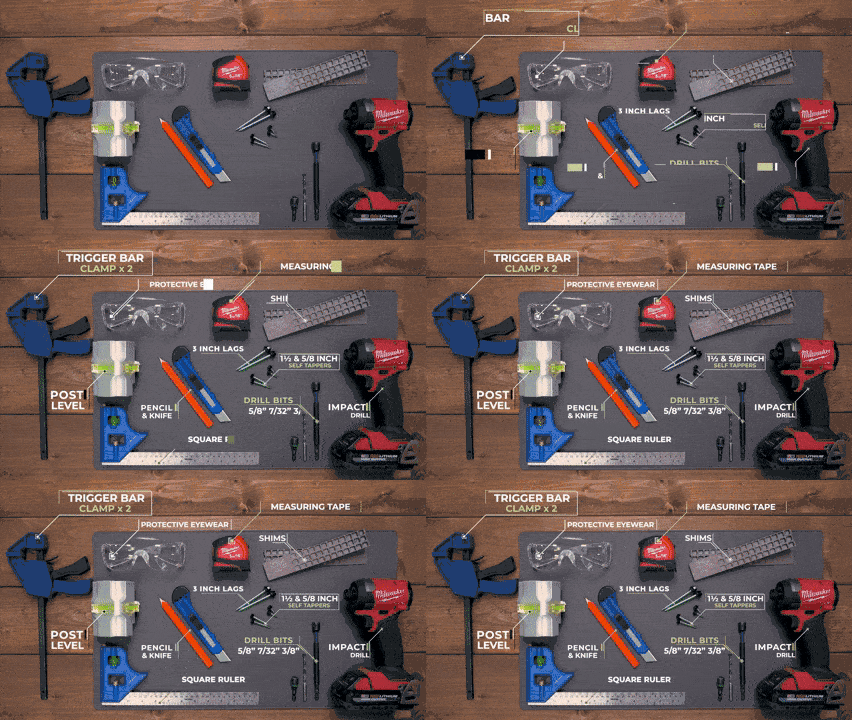
Tools Checklist

10 min

Impact Driver

$140

Power Drill

$198

Concrete Drill

$219

Clamps

$35

Composit Shims

$30

Level

$15

Measuring Tape

$10

Non-ferrous Blade

$33

Square

$14

Mitre Saw

(with non-ferrous blade)
$140

Our posts come precut to 42” or 36” railing,  One of our specialists will review your plan drawing and packing slip with you. When your materials arrive, check to make sure you have everything. If anything is missing or you have questions, contact us right away.

Tools Checklist

10 min

Impact Driver

$140

Power Drill

$198

Concrete Drill

$219

Clamps

$35

Composit Shims

$30

Level

$15

Measuring Tape

$10

Non-ferrous Blade

$33

Square

$14

Mitre Saw

(with non-ferrous blade)
$140

  • Review Materials: Make sure they match what came on your invoice and site layout.
  • Position the first end post: Place one end post near the edge of your deck so the lag bolts will secure it to adequate blocking/support. Square the post with the deck edge and mark the holes with a pencil.
  • Pre-drill and attach the first post: Pre-drill the holes and fasten the post to the deck. Do not fully tighten the lag bolts yet.
  • Install the second end post: Repeat steps 1-2 for the remaining end post.
  • Measure for rails: Measure the distance between the two posts from the inside edge of each post, NOT from the baseplates. Add 2.5 inches to your measurement
  • Cut and insert rails: Cut both the top and bottom rails to that length. Insert the rails into the slots in the end posts.
  • Level and secure posts: Check if your posts are level. If not, level them using shims. Then fully tighten the lag bolts.
  • Secure the bottom rail: Use two 1.5-inch screws (one per side) on the inside of the bottom rail or outside of the post to prevent the bottom rail from moving
  • Install corner posts: For jobs that need corner posts, cut the rails at 45 degree angle to fit into the corner post. Make sure the post is loose, line up the rails and fasten using the 1 1/2″ self-tapping screws, then level the posts.
  • Install line posts: Slide the rails through the line post. Make sure one post is loose and put it together to build the frame. Level the line post and fasten the rails onto the post using the 1 1/2″ self-tapping screws.
  • If you can’t use the full rail then use the included splice, join the two rails together using the splice and fasten using 2 screws.
  • Position spacers: Snap the spacers onto the bottom rail, starting with a flat end on one side and working across to the other side. Center the spacers so there is equal spacing on each side. Our spacers come pre-cut to meet building code requirements so you don’t have to worry about trimming any of the other pickets.
  • Cut final spacers: Measure the distance between the bottom of the last picket and the inside edge of the end post, and cut two spacers to that length. Snap the final spacers into place on both the top and bottom rails.
  • Secure the top rail: Gently remove the post caps from the end posts and use two (2) ¾-inch screws to secure the top rail inside the end posts.

👨‍🔧 Pro Tip
Fasten all screws at the very end. This ensures you don’t accidentally put the screw in the wrong place and end up with an extra hole.

  • Review Materials: Make sure they match what came on your invoice and site layout.
  • Mark the posts: On one post, mark 4 inches from the top (this is your top stair post). On the other post, mark 2.5 inches from the top (this is your bottom post).
  • Install the first post: Clamp a picket to the side of the post and secure with 3 fasteners. Position the post so there’s adequate support underneath for a lag bolt. Use a level to ensure the post is perfectly vertical. If needed, insert composite shims underneath to level it.
  • Drill anchor holes:
    – For wood decks: Use an impact driver with a 3/16″ drill bit or power drill
    – For concrete: Use a concrete drill with a 1/4″ drill bit
  • Install the second post: Repeat these steps for the second post. Both posts must be fully secured before proceeding.
  • Measure and cut rails: Measure the distance between posts and cut rails 6 inches longer. Lay the rail on the stair tread against the post, mark the correct angle, and cut.
  • Secure the rails: Fasten both rails on the exterior side using 12×3/4 screws. (We use self-drilling screws, but for concrete you may prefer a template or jig to align holes and prevent scratching.)
  • Cut locking pickets: Using the same saw angle from step 1, cut 2 pickets about 2 inches shorter. This allows the rails to slide in and lock properly
  • Attach locking pickets: Fasten one picket to the top rail and one to the bottom rail, ensuring the cuts match the stair angle. Tip: Use a jig or clamp to hold pickets in place while fastening. If using a clamp, pre-drill holes first.
    Secure pickets to posts: Fasten the first two pickets to each post with 1.5″ self-tapping screws.
  • Prepare remaining pickets: Cut all remaining pickets to match the first two pickets you attached to the top and bottom rail. 
  • Snap spacers onto the bottom rail and spread them evenly to check spacing. Most installations require trimming 4 spacers so the first and last spacers are equal length. Our spacers come pre-cut to meet building code requirements so you don’t have to worry about trimming any of the other pickets.
  • Measure spacers to cut: You’ll need to trim 4 spacers total: one top and one bottom at the start of the stairs, and one top and one bottom at the end. Slide spacer over one notch length. Measure from the picket  to the spacer.
  • Divide that length in half and mark from inside the notch. Mark 2 spacers and cut.
  • Trim spacers: Trim the 4 spacers: one top and one bottom at the start of the stairs, and one top and one bottom at the end. 
  • Install pickets and spacers: Remove all spacers from the bottom rail. Starting at one end, snap a spacer and picket onto both rails.
  • Continue alternating spacers and pickets until you reach the end.

👨‍🔧 Pro Tip
We use self-drilling screws, but for concrete you may prefer a template or jig to align holes and prevent scratching.

  • Many clients opt for baseplate covers. To install them, slide the two halves together around the post and snap them into place.
  • Go over the entire railing system and check if you missed any loose screws, notice if there are any scratches.
  • Step back to admire a job well done.

Troubleshooting Guide

Common issues and solutions from our installation experts

  Posts feel wobbly after installation

Stair Aluminum Railing - Quick Code Checklist

Post Layout

  • Max 5ft apart (level + stairs)
  • Set ~ 1″ in from step/landing edge (more if step overhangs)
  • Posts must handle 200 lb sideways load

Picket Spacing

  • Our picket spacers come factory-spaced under 4″ (no adjustments needed)

Railing Height

  • Guard height: min 36″ from step/landing
  • Stair handrail: 34″–38″ from stair nosing (the front edge of the step that sticks out a little)

Anchoring

  • Into concrete, wood with blocking, or tile/stone over concrete
  • The kit comes with standard 3″ Tapcon-style screws. Use the correct fastener for material type (ex: wood, concrete, or tile)
  • Drill full depth, clear dust, tighten until solid